CHICAGO — It’s been a long five years since the events of 2020 caused major and minor “hiccups” in the business of industrial laundries. Operators have been striving to regain their footing and to grow.
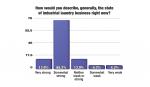
As 2025 ended, many challenges remained, but movement and vision toward positive pounds processed and financial growth were on an upward trajectory.
So, what can the industry expect in 2026?
American Laundry News heard from four operators who shared their thoughts on the coming year for the industry overall and their individual businesses.
COMING SUCCESSES
While industrial laundries will face challenges, all four operators look forward to achieving successes as well.
Randy Bartsch, executive chairman of Ecotex Healthcare Linen Service, headquartered near Toronto, believes “2026 will be a winner if we can continue to make service reliability gains, especially for our multi-site hospital networks where redundancy and consistency of on-time delivery really matter.
“We will get there by prioritizing our capital investments in areas that directly reduce labor intensity while improving service performance. As a mid-sized, multi-regional operator, Ecotex is focused on preserving our unique cultural advantages of speed, reliability, and relationship-centric service.”
Curtis Nichols, CEO of HandCraft Linen and Uniform Specialists based in Richmond, Va., is looking forward to seeing a full return on investment (ROI) on the company’s recent capital investments.
“We’ve been expanding capacity and upgrading our infrastructure, and 2026 is the year we expect to see those efficiencies really hit the bottom line,” he shares.
“I’m also excited about seeing our leadership team execute our growth strategy.”
HandCraft will achieve its goals, Nichols adds, through accountability and data.
“We have moved past managing by feel,” he says. “We want most decisions to be driven by real-time data. We have to continue to implement systems that give us the ability to scale our playbook.”
Ben Fox, vice president of sales and marketing for Salt Lake City-based Alsco Uniforms, offers a one-word answer for what he envisions for Alsco’s success in 2026: growth.
“Our plan is to continue to invest in our facilities, but more importantly in our employees across all departments, including sales, service, and operations, with a focus on growing Alsco Uniforms not just in North America, but globally,” he says.
Fox says his company’s plan to achieve its goals is also simple — focus on solving customer problems.
“We offer a value-based service, and a lot of hard work goes into producing a clean napkin, a clean towel, and a clean uniform,” he points out. “Our customer service will be paramount in ensuring the value of our services is met with satisfaction in building long-term business relationships.”
“We are looking forward to maintaining the momentum we have seen in our growth over the last year or so,” shares Edward Arzouian, compliance and special projects coordinator for Bates Troy Healthcare Linen Services in Binghamton, N.Y.
CLOSING THOUGHTS
No matter what industrial laundries face in the coming year, operators are maintaining positive attitudes and looking at challenges and overall trends for ways to overcome and succeed.
“Whatever the laundry industry will face in 2026, the healthcare laundry sector remains an essential, even critical, service, even if it is often overlooked,” says Arzouian. “If folks want healthcare, they are going to need healthcare linens. We just need to remind them every now and then.”
“I think we will see more accelerated consolidation,” Nichols predicts. “The cost of entry and the cost of upgrading equipment are very high. You’re going to see regional players continue to grow, while smaller operations may look to exit.”
Bartsch believes three “themes” will define the industry next year:
- Technology as a competitive differentiator — AI, automation and data analytics will separate companies that invest with discipline from those that delay.
- Workforce as the limiting factor — Technical and engineering labor shortages will constrain output more than customer demand.
- Customer sophistication rising fast — Hospitals, restaurants, manufacturers, hotels, and national chains all want deeper operational transparency, and they want partners who can help them translate the sea of data into better outcomes.
“All in all, I forecast that 2026 will reward operators who move decisively toward modernization while staying grounded in service, reliability, culture and ethics,” he concludes.
Click HERE to read part 1 about industry performance and challenges in 2026.

People who appear in this article:




Have a question or comment? E-mail our editor Matt Poe at [email protected].