STAUNTON, Va. — I have spent 30 years helping companies address hiring challenges that are unlikely to ease soon. In my experience, the “war for talent” is not only about attracting top candidates but also keeping them.
By refining key parts of their hiring strategies, employers can make recruitment simpler, faster, and more effective.
Today, several forces are reshaping laundry hiring, including a shrinking applicant pool (especially for chief engineers and maintenance technicians), evolving immigration policies, and the rapid growth of artificial intelligence (AI).
WANTED: CHIEF ENGINEERS, MAINTENANCE TECHNICIANS
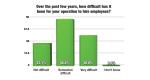
Over the past six to eight years, I have seen a shift in the roles companies ask my recruitment firm to fill.
Previously, clients focused on operations managers, sales representatives, sales managers, and route delivery personnel. More recently, however, I have handled and filled more searches for chief engineers and maintenance technicians — now among the most difficult positions to fill in our industry.
Why is it a challenge to fill chief engineer and maintenance technician positions now vs. several years ago? There is a low supply of, and high demand for, these employees. This supply-and-demand reality generally creates a higher wage point for these individuals.
And these skilled workers are being compensated higher in other industries. Many manufacturing plants offer set 8-to-5 shifts and compensate their employees’ hourly wages versus a base salary.
Another reason it’s challenging to fill these positions is that many of the good employees are retiring. We were fortunate for a long time to have good retention, but I have seen the workforce really age due to retirement or health issues.
In laundry, these are tough, dirty jobs with hybrid skills required. The square footage in laundries has vastly increased over the past 10 years; however, departments have not changed.
When you have a technician or manager leave or go elsewhere, that puts a big burden on the hiring manager shareholders to fill that spot and fill those duties. Maintenance technicians and chief engineers/managers must possess many skills combined in one job title — not just a welder or electrician who is focused on one skill. These positions sometime require licenses or special certifications. This means longer delays for employment and interest in other industries.
The myth that has been perpetuated is that skilled trades are viewed as a lesser profession at community colleges and universities, but the trades are growing in momentum fast today.
These are significant career options, and we must leverage our vocational education programs to convince younger folks coming into the work world that facility maintenance is a solid, long-term, good profession to get into, and there’s a lot of growth potential, as well.
Unfortunately, people interested in laundry engineer and maintenance careers are influenced or advised by others not to get into the profession due to demanding hours. For example, parents, former employees, co-workers, etc., will have a major influence on this matter if they worked in the laundry industry.
SHRINKING APPLICANT POOL
The laundry and textile industry has long faced limited applicant numbers, partly because candidates often view it as less recognizable or appealing than other industries. Yet one of our industry’s greatest strengths is its recession-resistant nature. While many people associate career success with well-known companies such as Google, Apple, Tesla, and Microsoft, true success is ultimately defined by the individual — not by the company name.
The laundry and textile industry competes with hospitals, retailers, manufacturers, logistics providers, warehouses, and now data centers for both hourly and management talent. At the same time, candidates expect more competitive compensation, stronger benefits, flexible schedules, remote options where possible, and a positive workplace culture.
Higher turnover among hourly and salaried employees has also pushed employers to be more flexible, especially with compensation, as the cost of living continues to rise.
For example, consider a maintenance technician earning $28 per hour who has been with the same employer for three years (and received annual increases each year) and is likely to receive a promotion within six to 12 months. Why would that person move to a similar company in the same industry for the same or lower pay? In most cases, they would not — unless they were being terminated or had already decided to leave. To attract strong candidates, employers must offer a compensation package that is better than what candidates already have.
In the past, employers could rely on traditional job postings to fill open roles. Today, that approach is no longer enough. With technology moving quickly and candidates having more options outside the laundry industry, employers must speed up the recruitment process to attract and keep candidates engaged. It should not take a week to review an application or schedule an interview when modern communication tools are readily available.
Recruiting now requires a courtship approach, much like dating. If the opportunity feels promising after the first meeting, candidates are more likely to continue; if not, they will move on to another opportunity.
External recruiters actively source candidates who may not be looking for a new role but are employed, qualified, and open to the right opportunity. Referrals and candidates from adjacent industries with transferable skills continue to be essential sources of talent.
Internal recruiters, HR (human resources) professionals, and hiring managers can increase applicant and candidate flow by taking the following steps:
- Partner with an industry recruiter who can actively promote your company to potential candidates.
- Strengthen your employer brand through positive reviews and greater market visibility.
- Offer compensation packages that exceed the market average.
- Use social media to reach a wider audience and attract more applicants.
- Respond to applicants within hours to screen candidates and schedule interviews quickly.
- Automate the screening and interviewing processes.
- Improve job postings by clearly listing compensation, location, schedule requirements and mobile-friendly application steps.
- Expand referral programs with bonuses and incentives for employees, their networks, and outside organizations.
- Hire for reliability and attitude rather than demanding prior laundry experience.
- Recruit year-round rather than waiting until a vacancy occurs.
- Build relationships with workforce development groups, technical schools, laundry associations, universities and colleges.
- Simplify the application process so candidates do not lose interest or drop out. Applications should take five to 10 minutes whenever possible, and no more than 15 minutes. Long or unfriendly mobile applications can cause applicants to disengage and move on to other opportunities.
Check back Thursday for the conclusion about the effects of changing immigration policies and growing AI usage.

Have a question or comment? E-mail our editor Matt Poe at [email protected].