CHICAGO — Technology has infiltrated all aspects of the industrial laundry industry.
From automation to sensors, the technology keeps advancing and improving, often providing a benefit to operators.
This is true on the delivery side, as well.
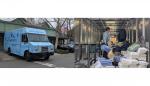
Technological advancements, from telematics to dashcams to handheld devices, are helping laundry route service representatives be more efficient and safer.
American Laundry News reached out to industrial laundry operators for their insights into advancing route service technology. We heard from Thomas Tsolakoglou, route supervisor for Shasta Linen Supply Inc. in Sacramento, California, and Brad Shames, president of American Textile Maintenance in Los Angeles.
What do you consider the most important part of running laundry/linen service delivery routes?
TSOLAKOGLOU: Shasta Linen Supply is a mixed plant with retail medical accounts and food and beverage. We try to balance each route with a combination of accounts, meaning that some are heavy and some are small.
The idea is that we don’t want one driver handling all heavy stops or vice versa, as a balanced route is important from a safety perspective, since there is less opportunity for injuries. It also helps regulate overtime.
We also work hard to keep boundaries on the routes and not have two drivers crossing each other in the same area.
Stop restrictions like timing are also critical when setting up delivery stops.
SHAMES: The two most important parts of running laundry/linen service delivery routes are to create a culture of extraordinary customer experience while always being safe.
How has route planning and safety technology changed over the past several years?
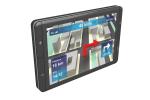
TSOLAKOGLOU: We are old-fashioned and still use a combination of good old index cards along with looking at Google Maps or utilizing a routing program.
We find that writing each account on a card allows us to mix them up given the restrictions a location might have.
The routing programs that we have looked at put the stops in the most efficient order, but that might not always work due to extraneous variables and the last thing we would want is a driver walking into a restaurant during lunch and trying to lay down mats.
SHAMES: The sophistication of the telematic vehicle tracking system has advanced tremendously in the last several years.
The system we utilize gives us real-time feedback on how safely the routeman is operating the vehicle and how efficiently it is being used. We use that information as a training opportunity with the routemen.
What has been fascinating to see is the advancement of the “in-cab” routemen-facing “AI Camera,” which is a part of the telematics system. It can provide real-time safety alerts to the routeman, and we have seen this, firsthand, avoid potential accidents.
How can an operation make the best use of technology?
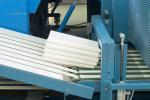
TSOLAKOGLOU: Technology has changed our industry in so many ways. For example, modern equipment can process our products by detecting stains and holes thus providing a higher quality standard, etc.
The GPS systems on our trucks have really added a new dimension to delivery and driver safety since our drivers are monitored with forward-facing and backup cameras.
Although we have always had a no cell phone use policy while driving, the forward-facing camera has eliminated anyone trying to text or talk while driving.
We can also monitor stop time and how the trucks travel; we want each route to follow the one we have set up.
When we see discrepancies, we can address them immediately.
SHAMES: It is key to partner with vendors that understand your operation and company goals.
There must be internal buy-in from the team that manages this aspect of your operation. The entire staff utilizing this technology must be trained on how to best use the software.
It is important that if you utilize these systems, you must have an ongoing training regimen addressing the safety issues that may arise.
What benefits does this technology provide for laundries in efficiency and safety?
SHAMES: First off, it helps us to plan. The data gathered by any of our technologies helps us to make better-informed decisions in our overall operations.
Secondly, it helps us to track our safety scores/goals. Because the data is generated, we can measure our safety goals and analyze where we are doing well and where we may need improvement.
Lastly, the technology helps us to stay accountable to each other. It helps our managers and employees to stay focused.
Check back Thursday for the conclusion about driver roles and training, and the rise of electric vehicles.
Have a question or comment? E-mail our editor Matt Poe at [email protected].