ALEXANDRIA, Va. — Leaders across the linen, uniform and facility services industry are increasingly aligned on the capabilities and strategies that will define the industry’s success over the next decade, according to new research findings released by TRSA.
The findings were developed with the support of Natter, an AI-based conversation intelligence platform, and Association Laboratory.
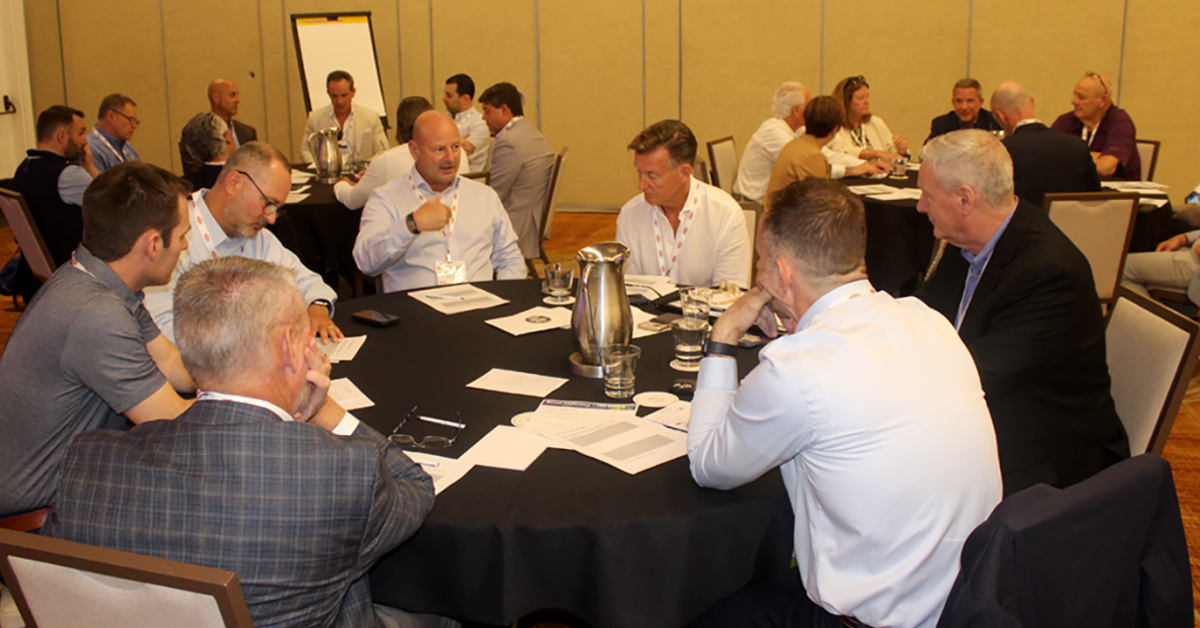
Drawing on nearly 106 confidential conversations with 37 industry CEOs and senior executives — supplemented by discussions among additional executives at TRSA’s inaugural CEO Summit during the 2026 Annual Conference — the research reveals a growing consensus around the industry’s most pressing challenges and greatest opportunities.
WORKFORCE DEVELOPMENT
Industry leaders identified workforce development as one of the most pressing challenges facing the industry, citing leadership succession gaps, skilled labor shortages, and the need to better transfer institutional knowledge to the next generation.
Executives emphasized that companies must invest more intentionally in leadership development and succession planning, expand internal talent pipelines, upskill employees through external partnerships, and rely on more modern hiring methods, including personality and competency assessments.
TECHNOLOGY ADOPTION
While technology and AI are increasingly viewed as essential to future competitiveness, participants cited legacy systems, a resistance to change, and a lack of workforce readiness as obstacles to successful adoption.
Leaders stressed the importance of preparing employees for change through technology orientation and education programs, redesigning workflows to optimize the value of new technology, and establishing leadership accountability for technology adoption.
MARKET CONSOLIDATION
As customers, suppliers, and competitors continue to consolidate, executives acknowledged growing competitive pressures — particularly for smaller and mid-size independent providers struggling to compete on scale alone.
Participants pointed to opportunities to differentiate through service quality, responsiveness, and stronger customer relationships, as well as expanding into new markets, strengthening supply chain relationships, and capitalizing on staffing changes created by mergers and acquisitions.
DATA-DRIVEN DECISION-MAKING
Participants agreed that demand for transparency and real-time information will continue to grow, with customers working to operationalize advanced linen-tracking technologies, overcome the limitations of legacy systems, and address the lack of standardized data platforms.
Leaders see significant opportunity in investing in modern data platforms and in improving connectivity across the supply chain, using predictive analytics to forecast garment life cycle and customer demand, and helping customers educate their workforce on the importance of data for providing operational excellence and efficiency.
COMPANY CULTURE
Executives consistently emphasized that culture, ethics and leadership are foundational to long-term business success. They also recognized several barriers to building a strong culture, such as greater governance complexity as organizations grow, supporting employees promoted into leadership roles, and sustaining an ownership mindset as companies scale.
To build resilient, high-performing teams, participants stressed that companies must lead by example at all levels of the organization, treat culture and ethics as operational priorities, support leadership development as employees are promoted, and celebrate employees who model organizational values.
“One of the most valuable outcomes of this research is seeing where industry leaders are aligned on the challenges and opportunities facing the industry,” says Joseph Ricci, president and CEO of TRSA. “The conversations reinforced that our members are focusing on the capabilities that will define success in the years ahead.
“This is one step in what will become an ongoing body of industry intelligence that helps members adapt to change, learn from one another and strengthen the future of our industry.”
LOOKING AHEAD
This new research follows a recent analysis that outlined the linen, uniform and facility services industry’s vital role in supporting the U.S. economy.
Commissioned by TRSA and conducted by Oxford Economics, the analysis found the industry supports 304,000 jobs nationwide, contributes $37.3 billion to U.S. GDP and generates $9 billion in state, federal and local tax revenue.
Together, these two research projects reflect TRSA’s commitment to the data, insights, and strategic guidance needed to advance the industry’s long-term success.
Building on the CEO research, TRSA will continue this initiative in 2026 through two additional Natter AI discussion series — one with senior operator members and another with participants in the association’s new Independent Operator Network (ION). During these online discussions, members will engage with peers from similar organizations to explore topics of shared interest and emerging industry challenges.
Findings from those conversations, as well as quantitative and qualitative research throughout the year to capture the “Voice of the Members,” will help shape discussions during the second annual CEO Summit at the 2027 TRSA Annual Conference, May 11-13, in Naples, Florida.
This continues TRSA’s commitment to providing members with forward-looking insights into the trends shaping the industry’s future.
Have a question or comment? E-mail our editor Matt Poe at [email protected].