CHICAGO — Most industrial and institutional laundries keep a close eye on their water usage.
Leaks and inefficient equipment utilization can increase water bills and other energy costs. Not to mention the environmental impact of wasting a precious resource.
But sometimes it can be difficult to see where the problem areas are in a laundry that staff have walked through and seen day after day, maybe year after year.
That’s when hiring an outside firm — with experience, expertise, and fresh eyes — to conduct a water usage audit, also known as a water efficiency study, could be of value.
OUTSIDE INSPECTION PROCESS
Kirk Stinchcombe is founder and managing director of Econics, a water sustainability specialist located in Victoria, British Columbia. He says that an ideal inspection begins with a front-end discussion among stakeholders in a boardroom to agree upon metrics and desired outcomes, often resulting in a project charter.
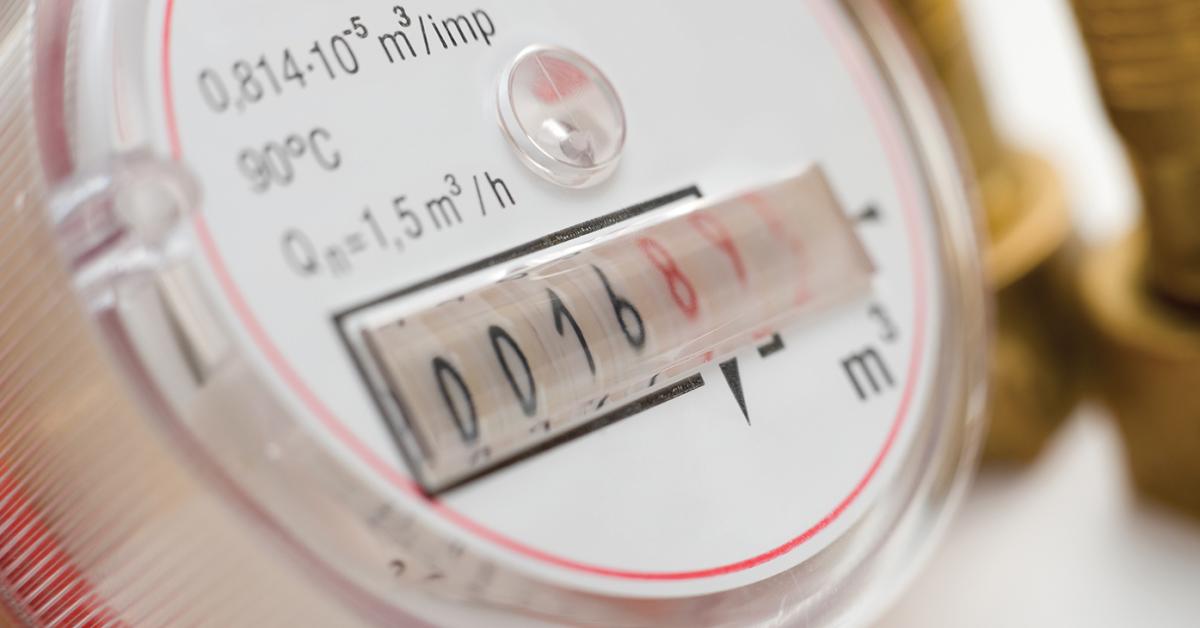
“This is followed by a facility walk-through, which can be quick or involve multiple visits, and includes monitoring meter data, potentially using submeters over a period of weeks or a month,” he says. “The firm typically uses an audit checklist and a proprietary spreadsheet to create a water balance, which is a simple accounting of all water entering the building, categorized by its use, including processes and leakage.”
Following the inspection, a report is generated containing calculations for the simple payback period and financial savings, accounting for both water and energy efficiency, particularly when saving heated water.
“If you’re working with a water service provider (often the city), there may be a process to receive grant payments upon review of the report and a requirement to submit follow-up reporting,” Stinchcombe points out. “It is recommended to check early for rebates, grants, and awards offered by the water service provider, which can include significant financial incentives.”
Lombardo Associates Inc. in Newton, Massachusetts, is an environmental consulting and engineering firm specializing in the development and implementation of creative solutions to water and wastewater management challenges for municipal, commercial and industrial clients. Owner Pio Lombardo says an outside firm’s inspection often starts with a feasibility study to determine prospective water-efficiency opportunities and their technical/financial viability.
“Be prepared to provide two to three years of water/sewer and energy bills,” he says. “Metering of water use and energy use may be inadequate, so be prepared to initiate adding meters if a desktop analysis suggests cost-effectiveness.”
Anna Kanto, business development manager for Ecoblue in Tucson, Arizona, which focuses on facility water conservation, says a typical inspection starts with reviewing water meter data and utility bills to understand overall consumption.
“From there, we conduct an on-site walk-through to review washers and other equipment, examine cycle programming and rinse steps, and evaluate load sizes and operational practices,” she says. “The findings are then compiled into a report that benchmarks performance using industry-standard metrics and outlines tailored recommendations for the facility.
“The goal is to connect the data with day-to-day operations and identify realistic opportunities for improvement.”
Peter Mayer, principal of Water Demand Management, a Boulder, Colorado, engineering consulting firm focused on demand-side management of water resources, says he would want to understand as much as he could about the facility itself.
“How it’s operating. How the equipment is being used, and then how much is the cost of the operating, maintaining this equipment,” he says. “I’d want the energy bills and water bills and also the maintenance costs, things like that — as much information about the existing situation as possible.
“And then the next step would be to consider what options are available. Are we talking about replacing all this equipment? Are we talking about maintaining it differently, doing some limited upgrades? Are we just looking at trying to save water? Are we trying to save water and energy? Are we hoping to cut down on repair costs or downtime? There are a variety of factors that would come into this type of analysis.
“And then, ideally, you’re going to end up with a report that looks at your current cost to operate your equipment. Here’s what new equipment would cost. Here are the benefits; here’s what it would do, here’s what that would change, here are the savings or reductions that might occur, here is where it might cost you more.
“A fair analysis will look at both sides and offer an analysis over the life of the equipment you’re looking at, explaining what that means and then comparing that to other options like maybe less-efficient equipment or continuing as is with existing equipment.”
“(Commercial) washers address these challenges through optimized low-water levels and adaptive fill systems that reduce baseline water consumption without compromising wash performance,” points out Larissa Rezende, marketing manager, business unit professional, for Miele Inc.
“Freely programmable controls … make it easy to set up customized wash programs for specific applications (e.g., hospitality, healthcare, workwear). These programs can also be locked, so operators select the correct settings every time and avoid changes that could increase water consumption.
“Efficient drum mechanics combined with high-G extraction improve wash action while minimizing water usage and residual moisture. Compatibility with precise detergent dosing systems helps prevent unnecessary rinse cycles.
“Furthermore, connectivity and data-logging functions … provide transparency in consumption and support performance monitoring.”
Click HERE to read part 1 about the benefits and challenges of using an outside water efficiency company.
And HERE for part 2 with suggestions for finding and selecting an outside firm.
Check back Thursday for the conclusion about the importance of communication and cooperation among all parties involved for water efficiency.
Have a question or comment? E-mail our editor Matt Poe at [email protected].