CHICAGO — Tunnel washers have come a long way in the past decade, says Brennan Pollnow, Girbau Industrial’s national sales manager.
“The biggest shift is that they simply have smarter user interface and reporting; it’s cleaner and more efficient,” he says. “Everything from water flow to chemistry to mechanical action is more intentional now, and operators feel that difference every day.”
Tunnel systems were originally designed around batch sizes of 35 to 110 pounds, recalls Jim Shaw, vice president and national accounts sales manager for LAVATEC Laundry Technology Inc.
“In recent years, the batch capacities have doubled and increased to more than 250 pounds,” he says. “This modification has resulted in doubling production capabilities.”
“We have seen a clear shift in how tunnel washer performance is defined,” says Ed Kirejczyk, president of Sea-lion America Company. “The industry is no longer asking whether tunnel systems are efficient — they are. The question now is how to extract the next level of productivity from systems that are, in many respects, already highly optimized.
“Our recent engineering efforts have focused on this exact challenge. The result is not a single breakthrough, but a series of targeted enhancements across pressing, drying, controls, and maintenance systems. When combined with disciplined operational practices, these improvements deliver measurable gains in throughput, energy efficiency, and system reliability.
“Importantly, our approach has been grounded in a practical philosophy: efficiency must be achievable in real operating environments — not just under ideal conditions.”
Casey Lott, marketing director for Kannegiesser North America, says that tunnel washers today are built for better hygiene, greater flexibility, and far lower consumption than what was seen five to 10 years ago.
“Modern systems handle a wider textile mix while using a fraction of the water, energy, and chemistry older designs needed,” he says. “Batch-specific processing, tighter thermal control, and cleaner internal flow make today’s washers faster, smarter, and a lot more efficient.
“The direction is simple: the future is all about doing more with less, delivering strong wash results with greener, lower-impact operation that fits the new age of commercial laundry.”
CHEMISTRY AND CONTROLS
When it comes to chemistry, Shaw says that in newer tunnel systems, chemical dosing will vary primarily based on standing bath or counterflow designs.
“Dosing has become incredibly precise,” says Pollnow. “Tunnels today adjust chemistry based on conductivity, flow or recipe steps. This keeps results consistent and helps operators control cost per pound.”
Lott points out, “Chemistry is now batch-specific, so every load gets exactly what it needs without any mixing between zones. Controls are quicker and more intuitive, with simple recipes and real-time feedback that make life easier for operators and cut down on mistakes.”
As tunnel systems become more advanced, control architecture plays an increasingly critical role in overall performance, Kirejczyk points out. Sea-lion has upgraded its control platform to a new-generation PLCNextsystem, providing faster processing speeds and greater data-handling capability.
“At the same time, we have transitioned from legacy communication protocols to OPC UA, ensuring robust and secure integration with third-party systems,” he says.
“The real value of these systems is not simply in data collection, but in making that data usable for operators on the plant floor. Complex systems that require specialized interpretation often see limited adoption, whereas intuitive, actionable data leads to measurable improvements.”
Controls constantly change and are designed to optimize a tunnel system’s performance, Shaw notes.
“They provide information designed to improve production, reduce downtime, diagnose problems, track customer goods, and report production and utility usage, and other vital information,” he says.
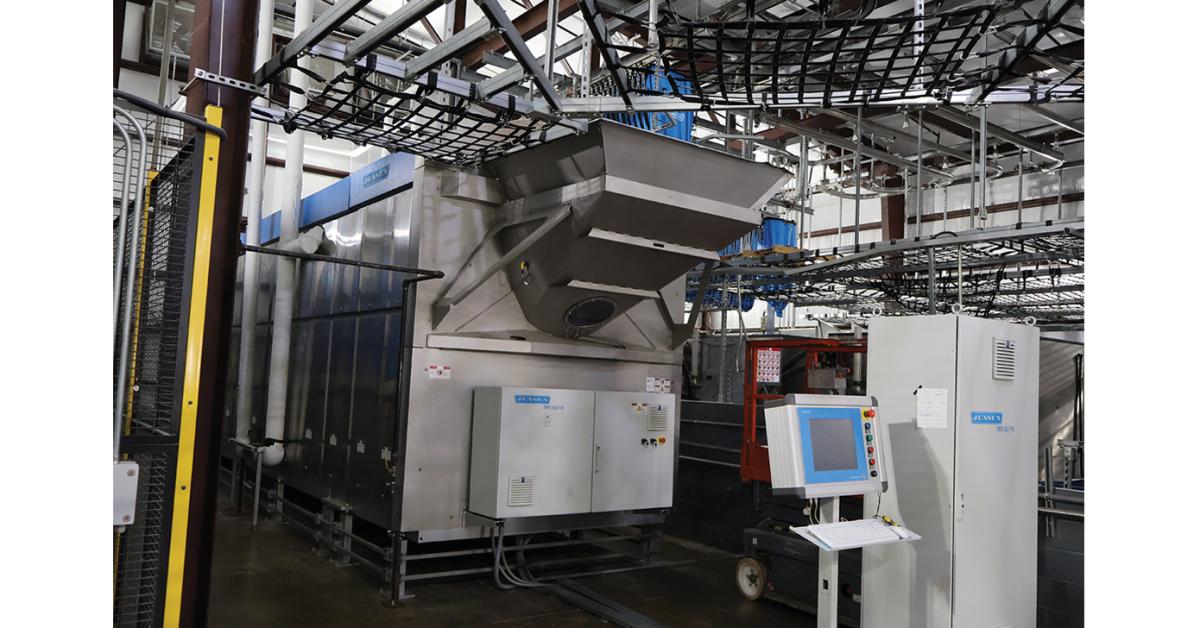
Patrick Gittard, marketing manager at JENSEN USA, points out that in recent years, JENSEN has updated the control system for its washing equipment, now featuring a highly intuitive and user-friendly interface. The company also offers an option called ErgoVision, which provides video monitoring.
“It improves operational safety while simplifying surveillance and saving valuable time,” says Gittard. “The system displays real-time video of the loading and unloading areas in a clear, high-resolution format on the HMI (human-machine interface), allowing operators to monitor the process at a glance. This helps maintain high productivity and enhances safety.”
“Controls today are highly advanced compared to older tunnels,” Pollnow says. “You get recipe-based programming, real-time data, alarms, remote access — all the things that help operators troubleshoot faster and keep the process consistent across shifts. Training is also easier because the interface makes complete sense.”
The advanced controls have made using tunnels simpler for employees.
“Operators have it much easier now,” shares Pollnow. “Interfaces are cleaner, steps are automated, and the tunnel basically walks the user through what needs to happen. This results in less babysitting, fewer mistakes and faster onboarding for new employees.”
MAINTENANCE ENHANCEMENTS
A tunnel system operating below peak condition quickly loses its efficiency advantage, says Kirejczyk. For this reason, Sea-lion has placed significant emphasis on reducing maintenance complexity and improving self-cleaning functionality.
“One key upgrade is the enhancement of the dryer lint-removal system,” he shares. “By adding multiple rows of compressed air for multi-point pulse cleaning, we significantly improve lint removal and maintain consistent, optimal airflow through the system.
“Additionally, we have reengineered the tunnel washer tank filtration system by relocating the filter screen from the center of the tank to the top. These design choices reflect a broader engineering philosophy: features that simplify maintenance often have a greater long-term impact than features that improve peak performance on paper.”
“Design simplicity will always reduce the maintenance of the tunnel systems,” says Shaw. “Access will always reduce cleaning time. Both conditions are addressed with the LAVATEC tunnel systems.”
“In the past, troubleshooting or optimizing a tunnel system often required direct interaction with a service technician, which could lead to downtime, delays, and added costs,” points out Brock Pellerin, vice president of Pellerin Milnor Corp. “Milnor has transformed this experience by offering a free, online Technical Knowledge Base that puts critical information directly in the hands of operators and maintenance teams without requiring login credentials.
“(It) includes, but is not limited to, installation guides, step-by-step troubleshooting procedures, programming support, parts information, error code explanations, maintenance practices, and operational tips. Having this level of information readily available allows tunnel users to quickly search and resolve commonly asked service-related questions anytime without having to place a service call.
“Utilizing the Technical Knowledge Base has the potential to reduce downtime, as issues can often be diagnosed and corrected immediately, and lowers operating costs by minimizing unnecessary service visits. It also supports workforce development by making it easier to train new employees and existing staff.”
Manufacturers also make tunnels much easier to clean and maintain, says Pollnow.
“Better access panels, improved filtration, and smarter sensor placement mean daily and weekly tasks take less time,” he says. “Predictive maintenance is becoming more common, which helps minimize downtime and surprises.”
“The new patented UVClean system prevents bacterial growth in double drum sections automatically and focuses on hygiene without any chemical supply,” Gittard shares. “UVClean can also be retrofitted. The managing directors of Wäscherei Kellner in Osterode, Germany — Helmut and Ricardo Tröger — have taken the opportunity to retrofit their JENSEN P50-15 tunnel washer with UVClean in order to provide their customers with a high level of hygiene through environmentally friendly processing.”
Lott adds, “Cleaner chambers, less residue and no liquor crossover keep everything running smoother with less hands-on time.”
OPTIMIZED FOOTPRINT
Finally, the footprint of these systems has been optimized over the years.
“Tunnel systems are designed to be fully automated with minimal operator interaction. For that reason — and by optimizing the available space — they do not need to utilize prime square footage in the plant, making plant design more functional,” notes Shaw. “The footprint related to production is decreasing while increasing productivity per square foot, due to the use of high-capacity tunnels and … mezzanines.”
“Tunnels are still big machines, but the internal design has become more efficient,” Pollnow adds. “You get more throughput in the same footprint, and modular layouts make it easier to fit a system into an existing space without major construction.”
“Streamlined internal flow keeps the footprint tight while pushing more production through the line,” says Lott.
“Bottom line: today’s tunnels hit harder, reuse smarter, dose cleaner, and run easier. More output, less consumption, and a greener, faster workflow all around.”
Check back Thursday for the conclusion about making optimum use of tunnel washers.
Miss part 1 about tunnel washer enhancements in design, mechanical action and water/energy usage? Click HERE to read it.
Have a question or comment? E-mail our editor Matt Poe at [email protected].